Breaking News: First Edition out now 01 July 2026 . Now Magazine is available
The Evolution of the Indian Education System: A Path to a Brighter Future
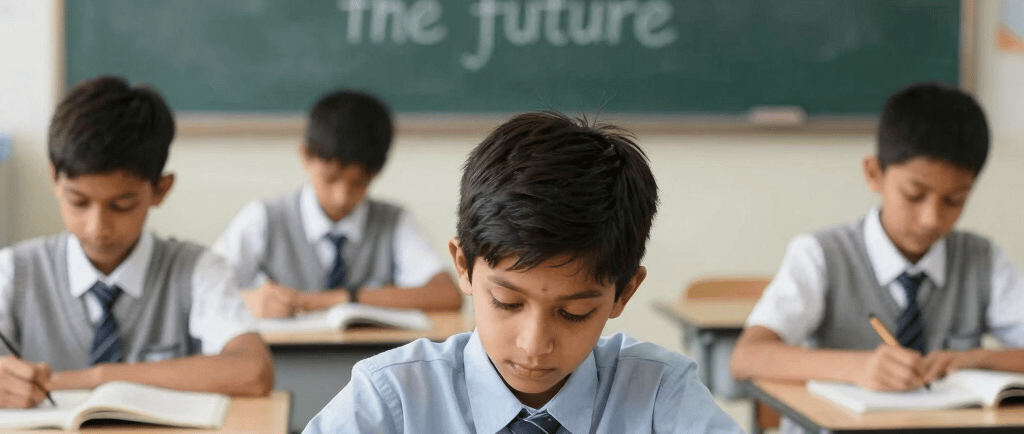
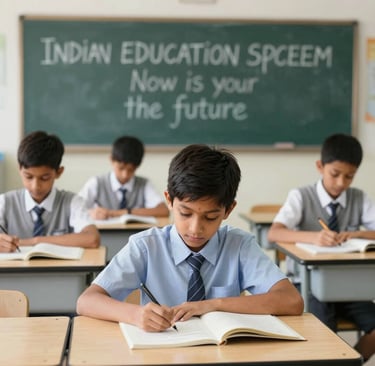
The Indian education system is characterized by its vastness and diversity, catering to a population exceeding 1.4 billion people. It consists of multiple levels, including primary, secondary, and higher education. At present, the system encompasses both government and private institutions, with the latter experiencing significant growth in recent years. The National Policy on Education (NPE) plays a pivotal role in shaping educational strategies, aiming to ensure equitable access to quality education across various strata of society.
EDUCATIONALALL NEWS
Shobhit Goyal
6/30/20268 min read
Current Landscape of Indian Education
The Indian education system is characterized by its vastness and diversity, catering to a population exceeding 1.4 billion people. It consists of multiple levels, including primary, secondary, and higher education. At present, the system encompasses both government and private institutions, with the latter experiencing significant growth in recent years. The National Policy on Education (NPE) plays a pivotal role in shaping educational strategies, aiming to ensure equitable access to quality education across various strata of society.
Historically, the roots of Indian education can be traced back to traditional Gurukul systems, where students learned under the guidance of a Guru. However, the British colonial presence catalyzed a shift toward formalized schooling based on Western educational models. This transition set the groundwork for the current structured framework which includes the Central Board of Secondary Education (CBSE) and the Council for the Indian School Certificate Examinations (CISCE), among others. Despite these advancements, the education system still grapples with numerous challenges, including inadequate infrastructure, a shortage of qualified teachers, and high student dropout rates, particularly in rural areas.
Moreover, the divide between urban and rural education quality remains a pressing issue. Urban centers boast better facilities and access to resources, while rural schools often face significant obstacles such as limited availability of teachers and lack of basic amenities. In the wake of globalization and technological advancement, there has been an increasing shift towards contemporary pedagogical methods, harnessing digital tools and modern teaching techniques. This evolution reflects a broader trend toward embracing innovative practices that align educational outcomes with global standards.
As we navigate the ongoing transformation of the Indian education system, it is crucial to address these systemic issues while simultaneously integrating modern methodologies. This sets the stage for an exploration of recent modifications intended to enhance educational quality and accessibility for all students across the country.
Recent Upgrades in the Indian Education System
In the past few years, the Indian education system has undergone significant upgrades aimed at creating a more progressive and inclusive framework for learning. These upgrades are largely driven by government initiatives that seek to address historical challenges in the sector. One vital element of this transformation has involved the incorporation of technology into educational practices. For instance, the Digital India campaign has facilitated the deployment of digital tools and resources in classrooms, making education more accessible and engaging for students. Schools are now utilizing smart boards, online resources, and educational apps to enhance the learning experience.
Moreover, the National Education Policy (NEP) 2020 marks a paradigm shift in educational philosophy, emphasizing the need for a more holistic approach to education. This policy advocates for curricula that promote critical thinking, creative problem solving, and collaborative learning. Instead of memorizing rote facts, students are encouraged to ask questions and engage with the content meaningfully. This change fosters independent thinking and better prepares students for the complexities of the modern world.
Another significant development has been the establishment of more inclusive education strategies. The focus is not only on academic performance but also on catering to diverse learning needs. Schools are now implementing individualized learning plans and inclusive teaching practices that accommodate children with varied abilities. This commitment to inclusivity helps ensure that every student, regardless of their background or learning style, receives quality education.
Furthermore, vocational education has gained momentum, offering students practical skills alongside traditional academic learning. Initiatives like the Skill India Mission aim to equip youth with competencies that meet industry demands, providing them real-world opportunities upon graduation. As a result, these recent upgrades indicate a positive trajectory for the Indian education system, ultimately paving the way for a brighter future for students across the nation.
The Role of Technology in Transforming Education
The integration of technology in the Indian education system has marked a significant shift in how educational experiences are perceived and delivered. Online learning platforms, like BYJU'S and Vedantu, have revolutionized traditional education, making quality learning accessible to a broader audience. These platforms offer interactive courses that cater to various learning styles, addressing diverse student needs across different geographical regions.
Furthermore, digital classrooms have emerged as a vital component in shaping the educational landscape. Schools and colleges are increasingly adopting smart boards, virtual labs, and interactive tools that enrich the curriculum and create a more engaging learning environment. This move not only enhances student participation but also provides educators with innovative tools to facilitate deeper understanding of complex subjects.
Artificial Intelligence (AI) and big data are increasingly being utilized to personalize learning experiences. Educational institutions now harness the power of data analytics to track individual student progress and adapt learning paths accordingly. This shift contributes to a more tailored educational experience, allowing students to progress at their own pace. Consequently, children who once struggled to keep up in a traditional classroom setting are now benefiting from a more customized approach.
The advancements in technology also extend to the accessibility of education. With mobile devices and the internet penetrating even remote areas of India, learning resources have become more widely available. The ability to access educational content online ensures that children from underserved communities are not left behind. This democratization of education through technology actively promotes inclusivity and equity, further paving the way for a brighter future in learning.
Challenges and Opportunities in Modernizing Education
The Indian education system faces a myriad of challenges in its efforts to modernize. One of the primary concerns is the issue of access and equity. Despite advancements over the years, significant disparities still exist among various socio-economic groups, rural vs. urban areas, and different states. This inequity limits educational opportunities for many students, effectively hindering overall progress. The digital divide is particularly pronounced, with many students in remote areas lacking access to essential technology and internet connectivity, which are vital for modern learning methodologies.
Furthermore, there is often resistance to change among educators and institutions. Many teachers trained in traditional methods may be hesitant to adopt new pedagogies or technologies. This reluctance can stem from a lack of training or resources, resulting in an environment where innovative practices are not fully embraced. Additionally, the hierarchical structure of the education system may impede the implementation of progressive changes.
Infrastructural limitations also pose significant challenges. Many educational institutions are inadequately equipped to support modern teaching methods. Classrooms may be overcrowded, lacking basic facilities, and often devoid of necessary learning materials. Such conditions can detract from the quality of education, further exacerbating existing challenges. However, these obstacles also present opportunities for innovation and improvement.
The push for modernization encourages the exploration of alternative teaching techniques and learning environments. Digital platforms can be leveraged to enhance accessibility, enabling remote learning solutions that diversify educational offerings. Additionally, there is a growing recognition of the need for teacher training programs that focus on contemporary teaching methods and technology integration. By addressing these challenges, the Indian education system can forge a path toward a more equitable and effective future.
The Impact of New Educational Policies
The landscape of the Indian education system is undergoing a significant transformation, largely driven by innovative policies introduced by the government. Among these, the National Education Policy (NEP) 2020 stands out as a pivotal reform aimed at making education more accessible, inclusive, and aligned with the demands of the 21st century. This policy marks a shift from a rigid and traditional format to a more holistic and multidisciplinary approach, which acknowledges the diverse needs of students.
One of the primary objectives of the NEP 2020 is to foster a learning environment that encourages creativity, critical thinking, and problem-solving skills. By integrating new pedagogical methodologies, the policy emphasizes experiential and skill-based learning over rote memorization. The inclusion of vocational subjects at an earlier age is a notable feature, enabling students to acquire practical skills alongside theoretical knowledge. This diversified curriculum not only prepares students for various career paths but also aligns their skills with global standards.
Additionally, the NEP promotes inclusivity by focusing on marginalized and disadvantaged groups, aiming to reduce disparities in educational access. With initiatives such as enhancing digital infrastructure and offering scholarships, the policy seeks to ensure that every child in India has the opportunity to receive quality education. Moreover, it emphasizes teacher training and professional development, which are crucial for the effective implementation of these changes.
The reformation of the Indian education system through these policies holds the potential to reshape the future of its students. By creating an educational environment that prioritizes interdisciplinary learning and recognizes the importance of adaptability in a rapidly changing world, the NEP 2020 not only prepares students for future challenges but also contributes to a more knowledgeable and skilled workforce, poised for global competition.
Preparing Children for the Future Job Market
The current transition in the Indian education system emphasizes the need to prepare students for an ever-changing job market. As industries evolve and new technologies emerge, the necessity for a curriculum that promotes skill development is paramount. Educational institutions are no longer merely focusing on rote learning; instead, they are integrating more dynamic approaches designed to cultivate critical thinking and problem-solving skills among students. This paradigm shift aims to ensure that individuals entering the workforce are not only knowledgeable but also capable of adapting to various challenges.
Skill development has become a cornerstone of modern education. Schools and colleges are introducing programs that focus on enhancing students' proficiencies in areas such as communication, teamwork, and digital literacy. Competencies in these fields are increasingly sought after by employers, reflecting a broader trend towards valuing practical skills over traditional qualifications. Moreover, exposure to real-world situations through internships and project-based learning plays a vital role in this transformation. Students who engage in hands-on experiences are granted a unique advantage, as they can apply theoretical concepts to tangible challenges.
Critical thinking goes beyond mere academic performance, enabling students to analyze information effectively and make informed decisions. By fostering an environment that encourages questioning and exploration, educational institutions lay the groundwork for a future generation of innovators and leaders. Additionally, practical projects tethered to local industries or societal needs offer students an invaluable opportunity to understand the workplace dynamics that await them. The educational reforms currently underway aim to equip students with the competencies necessary for success in a rapidly evolving job market, ultimately shaping a workforce prepared for the future.
Conclusion: Looking Ahead to a Bright Future for Education in India
The evolution of the Indian education system reflects its rich historical background while demonstrating a commitment to adapt to contemporary challenges. As highlighted throughout the discussion, significant strides have been made in educational policies aimed at increasing accessibility, inclusivity, and relevance. With government initiatives promoting digital literacy and skill development, there is a promising trend towards equipping students with competencies that meet the demands of a dynamic job market.
Moreover, the integration of technology in education has transformed the traditional approach to learning, facilitating personalized and interactive experiences for students. By adopting modern pedagogical practices, educational institutions are fostering an environment where students can not only acquire knowledge but also develop critical thinking and problem-solving skills essential for the future. This shift towards innovative methodologies indicates a trajectory towards an education system that prioritizes holistic development.
Looking ahead, the Indian education system stands at a crossroads, where ongoing reforms will determine its ability to respond to the needs of future generations. Continuous evaluation and adaptation of curricula are imperative, particularly in an era marked by rapid technological advancements and globalization. Emphasizing a child-centered approach will ensure that education remains relevant and responsive to the evolving societal landscape.
Ultimately, the potential of the Indian education system to positively influence the lives of countless children rests significantly on its capacity to evolve and embrace change. By fostering a culture of innovation, inclusivity, and equity, future generations will be aptly prepared to navigate the complexities of the modern world. Thus, a concerted effort towards reforming and reimagining education holds the key to unlocking a brighter future for India’s youth, creating a foundation that nurtures exceptional talent and ingenuity.
Get in touch
Address
27/7 Vishnu colony ankpat marg ujjain (M.P.)
Contacts
+91-810-335-4280
info@digitalimpactmagazine.com
© 2026 The Ledger. All rights reserved.