Breaking News: First Edition out now 01 July 2026 . Now Magazine is available
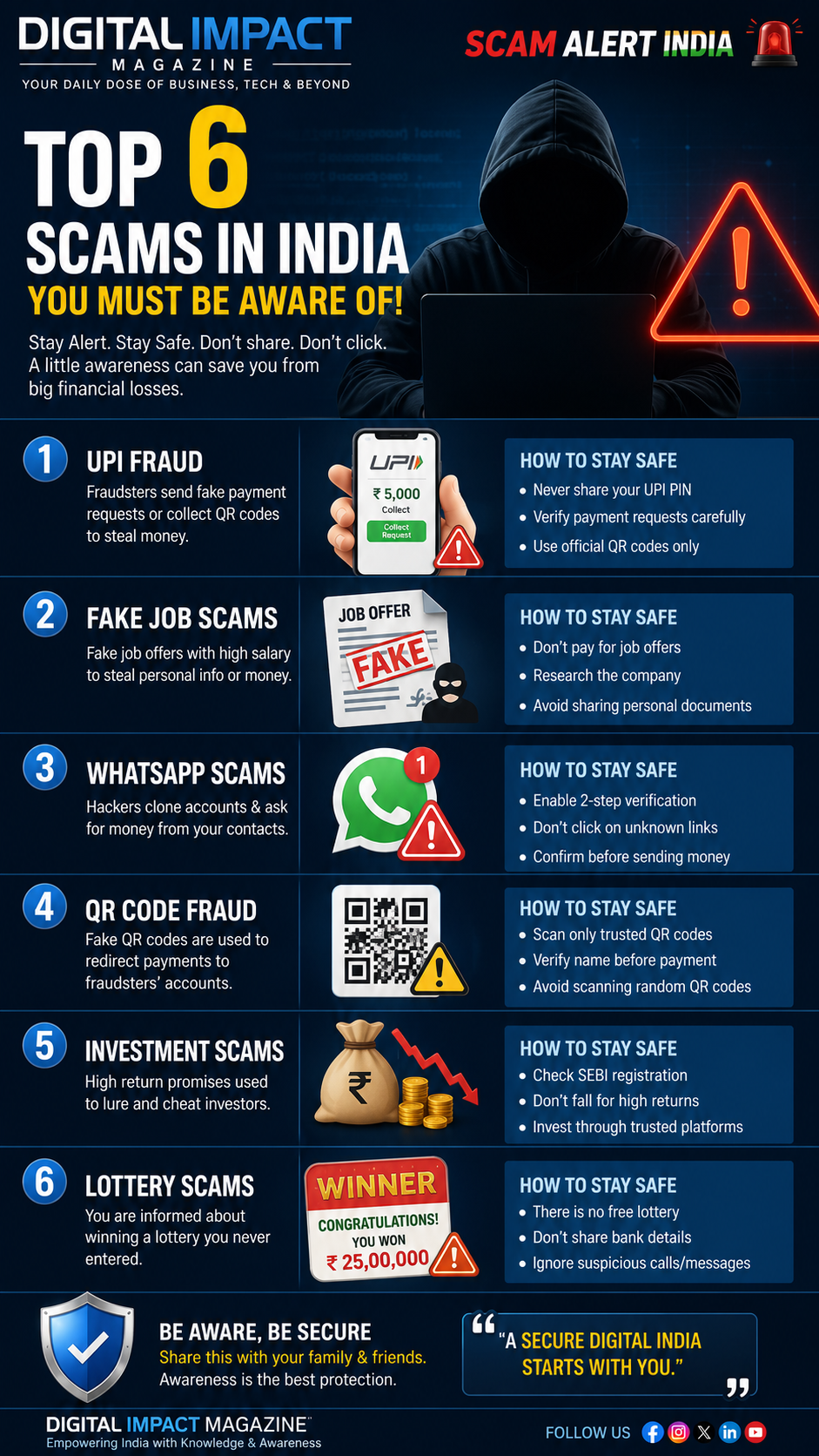
Top 6 Types of Scam in India
In recent years, India has witnessed a troubling surge in the prevalence of scams, affecting both individuals and businesses across various sectors. The rapid advancement of technology and the increasing reliance on digital platforms have created new opportunities for fraudulent activities to flourish. Scammers are becoming increasingly sophisticated, leveraging social engineering techniques and exploitative tactics to deceive unsuspecting victims.
ALL NEWSTECHNOLOGY
Digital Impact Magazine
7/24/20268 min read
Introduction to Scams in India
In recent years, India has witnessed a troubling surge in the prevalence of scams, affecting both individuals and businesses across various sectors. The rapid advancement of technology and the increasing reliance on digital platforms have created new opportunities for fraudulent activities to flourish. Scammers are becoming increasingly sophisticated, leveraging social engineering techniques and exploitative tactics to deceive unsuspecting victims.
According to reports, electronic and online frauds have escalated sharply, targeting various demographics—from young professionals to elderly citizens. With the growing digitization of everyday transactions, the importance of awareness regarding different types of scams has never been more critical. Victims often suffer significant financial losses, and the emotional toll can be equally damaging, leading to a pervasive atmosphere of mistrust.
Moreover, the COVID-19 pandemic has further exacerbated the situation, as scammers have developed numerous innovative schemes related to health, employment, and financial relief. Individuals and organizations must stay informed about these malicious efforts to protect themselves against being victimized. The grim reality is that scams are not just limited to conventional methods, such as phone calls or door-to-door solicitations; they now encompass a wide range of digital channels, including social media, email, and mobile applications.
Understanding the landscape of scams in India is crucial for creating effective strategies to combat fraud. This blog post aims to provide insights into the top six types of scams prevalent in the country, with the goal of empowering readers with knowledge and practical tips to safeguard themselves from potential deceit. Awareness is the first step toward prevention, and by familiarizing oneself with the various forms of scams, individuals can significantly reduce their risk of falling prey to con artists.
Understanding UPI Fraud
Unified Payments Interface (UPI) has revolutionized the way individuals in India conduct digital transactions. However, it has also become a prime target for cybercriminals who exploit its rapid adoption. UPI fraud primarily occurs through various deceptive tactics designed to manipulate victims into sharing sensitive information or authorizing illegitimate payments.
One common method used by fraudsters is social engineering. Scammers often pose as bank representatives or customer care executives, reaching out to victims through phone calls or SMS. They typically convey urgency, claiming fraudulent activity on the victim's account and requesting immediate action, such as sending a one-time password (OTP) or downloading a specific application that enables remote access. These manipulation techniques rely on creating a false sense of urgency and trust, making them alarmingly effective.
Recent statistics indicate that UPI-related fraud cases have surged in recent years, with thousands of victims reporting financial losses. According to the National Payments Corporation of India (NPCI), there were over 2 billion UPI transactions recorded in a recent month alone, emphasizing the system's popularity and the corresponding rise in fraud opportunities. Real-life examples abound, where individuals have lost significant amounts due to these scams; hence, awareness and education are critical in combating UPI fraud.
To safeguard against such fraudulent activities, users should adopt several practices. First and foremost, always verify the identity of anyone requesting sensitive information. Utilize official communication channels of financial institutions to report suspicious activity. Additionally, consider enabling two-factor authentication for added security and regularly monitor bank statements for unauthorized transactions. By staying informed and vigilant, individuals can significantly reduce their risk of falling victim to UPI fraud.
The Rise of Fake Job Scams
The proliferation of fake job scams in India has become a pressing issue for job seekers across various sectors. These scams typically involve deceitful practices where perpetrators offer non-existent job opportunities to exploit unsuspecting individuals. The modus operandi often includes luring victims with attractive job posts that promise high salaries and perks. Job seekers frequently encounter such scams through online platforms, including social media, job portals, and websites that claim to connect individuals with reputable companies.
Fraudulent recruitment agencies often target fresh graduates and those seeking employment, using tactics that promote urgency and excitement about the job offer. For instance, they may request payment for application processing, training fees, or even security deposits, claiming that these are mandatory for securing the job. This alarming trend has resulted in many individuals falling prey to schemes that leave them without their hard-earned money and without the promised job opportunities.
To identify legitimate job opportunities, job seekers must adopt a cautious approach. It is crucial to thoroughly research the company, checking for reviews and ratings on platforms like Glassdoor and LinkedIn. Additionally, legitimate job postings typically do not ask for upfront payments or sensitive personal information early in the hiring process. If an offer seems too good to be true, it often is. Engaging directly with companies and utilizing trusted recruitment agencies increases the chances of finding credible job offers.
In conclusion, awareness of fake job scams and employing diligence in the job search process is essential for protecting one’s financial well-being and securing legitimate employment in the competitive job market of India.
WhatsApp Scams: What You Need to Know
In recent years, WhatsApp has become a popular platform for communication, but it has also attracted various malicious actors looking to exploit users. WhatsApp scams typically involve deceptive messages aimed at tricking individuals into divulging personal information or financial details. One of the common types of scams is the phishing scheme, where scammers pose as legitimate entities, such as banks or government agencies, and request sensitive information.
Another prevalent form of WhatsApp scam is the fake message. Victims may receive messages that suggest they have won a prize or lottery, only to realize later that these are fraudulent attempts to obtain their money or personal data. Often, these messages create a sense of urgency, pressing the recipient to act quickly without thinking, thereby increasing the risk of falling victim to the scam.
Signs of a WhatsApp scam can include unsolicited messages from unknown numbers, poor grammar and spelling, and requests for personal information or money transfers. Additionally, if a message sounds too good to be true, it likely is. Users should also be wary of unfamiliar links included in messages, as these may lead to websites designed to harvest personal information.
To protect oneself from WhatsApp scams, individuals should adopt a few practical measures. Firstly, always verify the sender's identity before responding to unsolicited messages. Moreover, it is advisable to refrain from sharing sensitive information through the platform. Users should also enable two-step verification for added security and regularly update their privacy settings to limit who can view their information.
By staying informed about the different types of WhatsApp scams and exercising caution, users can significantly reduce their vulnerability to these deceptive schemes.
Decoding QR Code Scams
QR codes have become increasingly prevalent in recent years, particularly due to their convenience in facilitating contactless transactions and providing quick access to information. However, this convenience has also attracted scammers who exploit these codes to siphon off money or steal personal information. Understanding how these QR code scams operate is critical for safeguarding oneself against potential threats.
One common method employed by scammers involves creating fake QR codes that mimic the legitimate codes used by businesses. For instance, a scammer might replace a legitimate QR code in a public location, such as a restaurant or a transport service, with their own. When unsuspecting individuals scan the fake code, they may be redirected to a fraudulent website designed to harvest their personal information or payment details. In some cases, these scams might even install malicious software on their devices.
Another prevalent tactic revolves around phishing attacks where scammers circulate QR codes through emails or messages that appear to be from trusted sources. Once a victim scans the QR code, they may unknowingly download malware or be redirected to a page asking for sensitive data, such as passwords or banking information. This method emphasizes the importance of verifying sources before engaging with any QR code.
To safely interact with QR codes in daily life, users should adopt certain best practices. Always check if the QR code is placed in a reputable and trustworthy location. Additionally, using a dedicated QR code scanner app that previews the URL before redirecting can help ensure safety. Furthermore, avoid entering personal information on any site that you reach via a QR code unless you are certain of its legitimacy.
Being aware of the tactics and preventative measures associated with QR code scams will aid users in navigating the digital landscape more securely.
Investment Scams: Risks and Red Flags
Investment scams in India have proliferated in recent years, exploiting the aspirations of individuals seeking financial growth. Understanding the various fraudulent schemes is crucial for potential investors who wish to safeguard their savings. This article aims to illuminate the more prevalent types of investment scams and the warning signs to consider before committing to any financial opportunity.
One prevalent form of investment scam is the Ponzi scheme, where returns to earlier investors come from the capital of new investors instead of profits generated by legitimate business activities. Investors may be lured by promises of high returns in a short time frame, often with little to no risk. It is vital to recognize that such returns are often unrealistic and devoid of a transparent operational basis.
Another frequent scam is the unregistered currency or asset trading operation, which often promotes trading in foreign currencies or cryptocurrencies without any regulatory oversight. Scammers may employ pressure tactics to prompt investors to act quickly, often creating a sense of urgency that should invariably raise suspicion. Investors must always verify the legitimacy of any platform before investing.
Due diligence is an investor's best defense against becoming a victim of fraud. Potential investors should research the backgrounds of the individuals promoting investment opportunities and the validity of the company’s registration with regulatory bodies such as the Securities and Exchange Board of India (SEBI). Look for reviews from past investors and check if there have been any complaints lodged against the investment firm.
Key red flags include unsolicited offers, guarantees of high returns, and a lack of transparency about how the investment works. By being aware of these risks and carefully evaluating all investment opportunities, individuals can significantly lower their chances of falling victim to investment scams in India.
Lottery Scams and How to Avoid Them
Lottery scams represent a significant concern for individuals in India, preying on the trust and hope of potential victims. These fraudulent schemes typically claim that unsuspecting individuals have won a lottery or a prize, often through emails, phone calls, or messages claiming affiliation with reputable organizations. The scammers usually entice the targets with the promise of substantial monetary rewards or luxurious prizes, all while requesting personal information or an upfront payment to claim the supposed winnings. This is a deceptive tactic used to exploit the victim's hopes.
To identify a lottery scam, one must be aware of several red flags. First, if you did not enter a lottery or competition, receiving a notification of a win should immediately raise suspicion. Additionally, legitimate lotteries will not ask for payment to release your winnings. Any request for payment, whether for taxes, processing fees, or administrative costs, is a classic indication of a scam. Furthermore, poor grammar, vague details, or urgent calls to action in communications are signs that the message is not from a credible source.
If approached by potential lottery fraudsters, it is crucial to remain vigilant. Do not share personal information, such as bank details or identification numbers, and avoid any form of payment to confirm winnings. Reporting the scam to local authorities or consumer protection agencies can not only prevent personal loss but also assist in efforts to cease the activities of scammers. Teaching oneself and others about these scams can help create a more informed community resistant to the manipulative tactics employed by fraudsters.
In conclusion, recognizing and understanding lottery scams is essential for safeguarding individuals from financial loss and ensuring a proactive approach to potential fraud. By staying informed and cautious, individuals can protect themselves against these deceitful practices.
Get in touch
Address
27/7 Vishnu colony ankpat marg ujjain (M.P.)
Contacts
+91-810-335-4280
info@digitalimpactmagazine.com
© 2026 The Ledger. All rights reserved.